Otto Brooks · 4 November 2026
Shifting Focus to Behavioral Analytics Integration Within SEO Dashboard Customizations
Behavioral analytics integration within SEO dashboard customizations has gained traction among digital marketing teams seeking to align search performance data with actual user interactions on websites, and platforms continue to evolve these capabilities as of November 2026. Researchers at various institutions have documented how metrics such as time on page, scroll depth, and return visit frequency can supplement traditional keyword rankings and backlink profiles when configured properly inside customizable interfaces.
Core Components of Behavioral Data in SEO Contexts
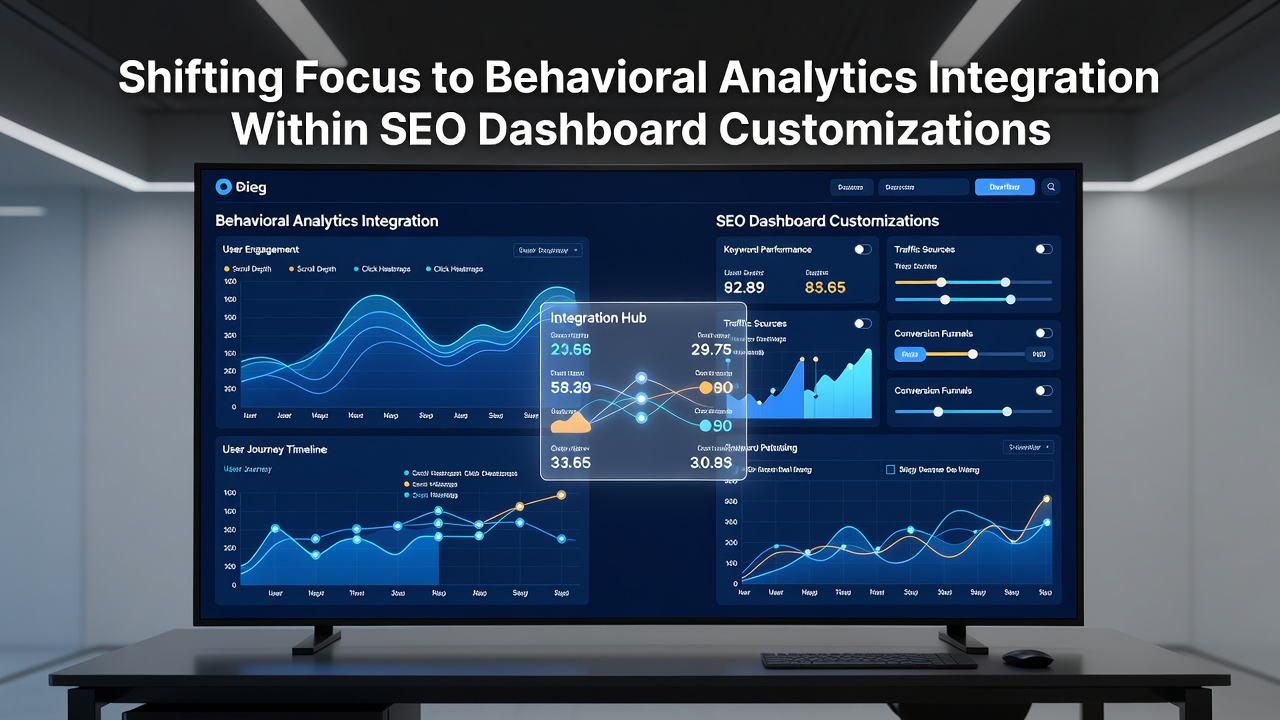
Behavioral analytics draws from sources including server logs, client-side tracking scripts, and third-party tools that capture user paths through site navigation, while SEO dashboards allow users to overlay these datasets onto existing keyword performance reports. Data shows that integration often involves API connections between platforms like Google Analytics 4 and custom SEO suites, which enables real-time synchronization of engagement signals with crawl error logs and indexation status updates. Observers note that teams configure widgets to display heatmaps alongside organic traffic trends, creating views where bounce rate patterns appear next to SERP position changes over time.
Those who have implemented these setups report that custom fields can pull in session replay summaries or conversion funnel data, although the process requires careful mapping of event categories to avoid data silos. Evidence from industry reports indicates that European organizations have led in adopting standardized schemas for behavioral tagging since 2024, which facilitates smoother imports into multi-user dashboard environments.
Customization Techniques and Technical Approaches
Dashboard builders support drag-and-drop modules that connect behavioral datasets to SEO metrics through conditional formatting rules, so users can highlight pages where high dwell times coincide with declining rankings. Research indicates that scripting options within these systems let analysts define thresholds for metrics such as pages per session, triggering automated alerts when values fall below established benchmarks. Teams at mid-sized agencies have documented workflows where behavioral filters refine keyword research outputs, filtering out terms that drive traffic but fail to retain visitors according to aggregated session data.
Integration extends to mobile-specific views where touch interaction logs merge with core web vitals scores, and developers apply JavaScript tags to capture these elements before they flow into the main dashboard canvas. What's interesting is how some platforms now include pre-built templates that automatically segment audiences by behavior clusters, allowing SEO specialists to compare performance across groups that exhibit different navigation habits.
Implementation Examples Across Organizations
One study revealed that a North American e-commerce site integrated behavioral signals into its SEO dashboard by linking user path data from its content management system directly to ranking trackers, resulting in refined internal linking suggestions based on actual click patterns. Australian digital agencies have applied similar methods using government-published digital economy statistics from the Australian Bureau of Statistics to benchmark engagement rates against sector averages. Australian Bureau of Statistics reports provide context for these comparisons when teams calibrate their custom views.

Canadian research institutions have published findings on how educational websites benefit from these integrations, where student navigation logs inform content optimization priorities that align with search visibility goals. The process often starts with mapping user events to specific SEO KPIs, then proceeds through iterative testing of dashboard layouts to ensure clarity across different team roles.
Current Developments in November 2026
As platforms roll out updates throughout November 2026, several providers have introduced machine learning layers that predict shifts in behavioral metrics based on historical SEO changes, allowing proactive customizations before performance dips occur. Data from academic papers shows increased focus on privacy-compliant tracking methods that maintain behavioral insights without relying on third-party cookies, which aligns with evolving regulatory frameworks in multiple regions. Teams configure these predictive elements through rule-based interfaces that pull from both first-party analytics and aggregated search console data.
Industry organizations such as the Digital Analytics Association have hosted sessions detailing best practices for embedding these features, and participants share case examples where behavioral integration helped identify content gaps that traditional ranking tools overlooked. Digital Analytics Association resources outline frameworks that support consistent implementation across diverse site architectures.
Conclusion
Behavioral analytics integration continues to reshape how SEO dashboards present performance information by connecting user interaction patterns directly to search optimization tasks. Organizations that adopt these customizations gain access to layered datasets that support more precise adjustments to content and structure strategies, while technical setups emphasize compatibility with existing tracking infrastructures. The developments observed through late 2026 reflect ongoing refinements in data handling methods that prioritize both accuracy and compliance across global implementations.